


Common questions
FAQ for flying in Interlaken
Quick answers from a local tandem pilot. Each topic links to a full guide if you want more detail.
Safety & equipment
Short answer: Paragliding carries real risk. In all my time in Interlaken, the area has recorded zero deaths across a flying scene with over 70,000 tandem flights a year. Flights go ahead when conditions are suitable. The biggest practical risk on the day is a poor takeoff run. Full safety guide →
Tandem wings are shock-tested to 8G. Lines are checked before every flight. Modern harnesses require every strap to be locked before takeoff. A reserve parachute is carried on every flight. Equipment breakdown →
You fly with a certified tandem pilot. They handle the glider and the decisions in the air. You need to walk uphill at the launch and take a short run on takeoff. What happens on the day →
Interlaken pilots carry liability insurance. Swiss hospitals may still require upfront payment. Your own travel insurance covering adventure activities is what matters most. Insurance guide →
Nervous first-timers
Often yes, you can still enjoy it. You're seated in a harness moving smoothly through the air. It feels different from standing on a cliff edge. Most anxiety hits at takeoff. Nervous flyers guide →
For most people, yes. A few running steps, then you're airborne. When your pilot says run, commit and keep moving. Takeoff advice →
The 8:30–10:30 morning slot is usually the smoothest, with calm air before thermics build. Use the flight finder to match your situation. Morning slot → · Flight finder →
Weather & planning
A rainy morning can still fly later. Mountain weather changes hour by hour. Pilots use MeteoSwiss and live radar. Operators usually reschedule or refund when your slot is grounded. Cancellation guide →
The best slot depends on what you want. Morning is calmest. Midday is strongest for longer flights. Afternoon often brings smoother air with good height. Best time guide →
Book early in your trip. Avoid the morning you leave. That gives you days to reschedule if weather blocks day one.
Cost & duration
Typically CHF 170–210 for a standard tandem flight. Photos and video are usually extra (~CHF 40 on site). Prices change by season. Full cost guide →
Plan for 1.5–2 hours from meeting your pilot to landing back in town, including the drive up to launch. The flight itself is usually 10–20 minutes in the air. 90 minutes before you fly →
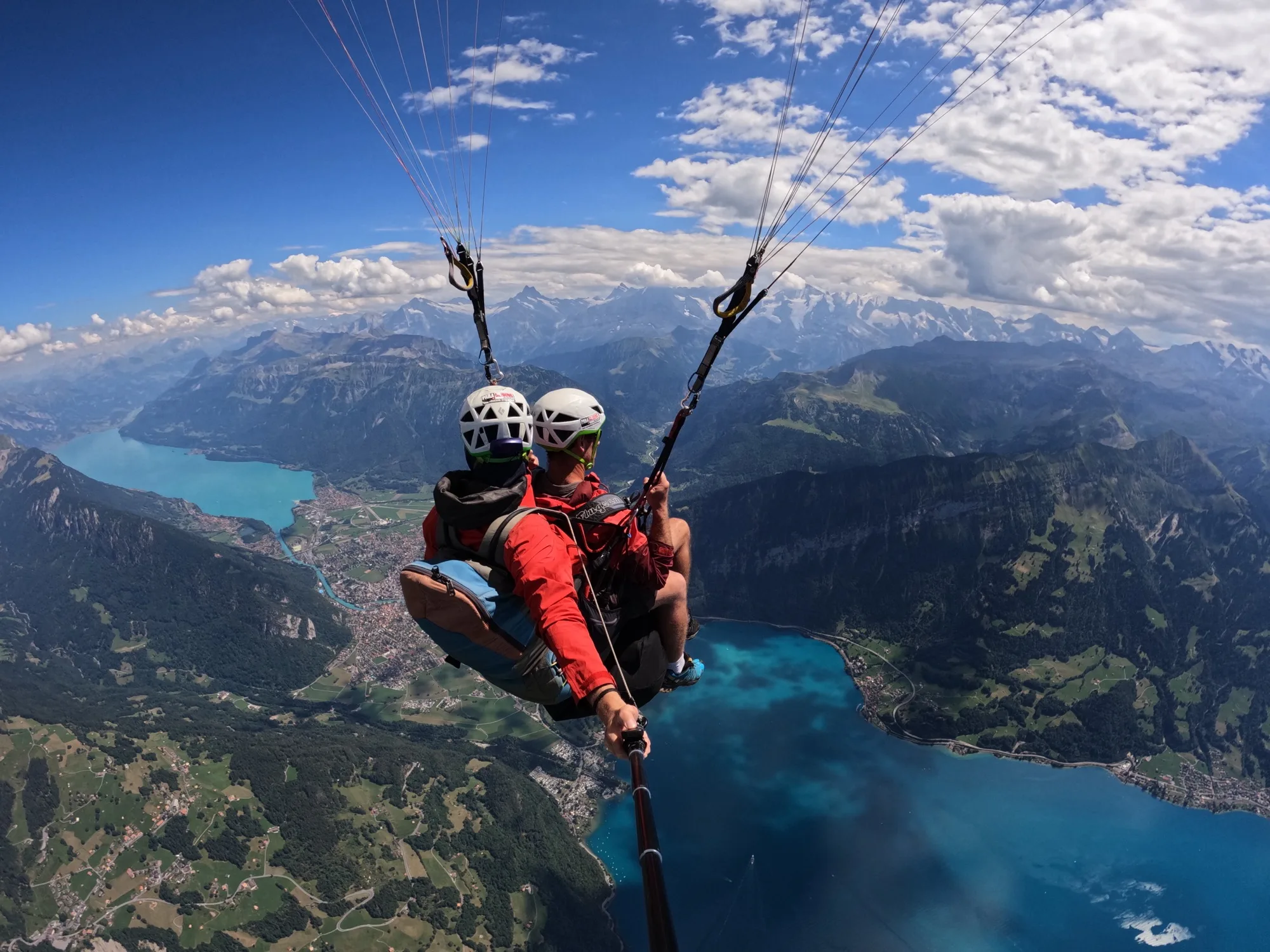
For most visitors, yes. You're flying between two lakes with the Bernese Alps as your backdrop. It is one of the best tandem flying areas in the world. Why Interlaken →
Families & eligibility
Yes, when they meet age and weight limits and can follow instructions at takeoff. The morning slot is usually best. Age, weight & fitness →
Yes. Both minimum and maximum limits vary with weather and pilot. Heavier passengers often do best in the midday slot. Weight guide →
Yes. Many visitors in their 60s, 70s, and beyond fly tandem. Fitness at takeoff matters more than age. Fitness & mobility →
On the day
Closed shoes you can run in, layers (it's colder at launch than in town), sunglasses. Operators provide helmet and windproof overall. Clothing by season →
Your phone stays packed away during the flight. Glasses and sunglasses are fine. GoPro without a selfie pole can work if your pilot agrees. Photo packages (~CHF 40) are usually available on site. What to bring →
Skip a big meal for 2–3 hours before your flight. A heavy stomach and airtime make a bad combination, especially if you get motion sick easily. Light snacks earlier in the day are fine. If you feel off on the day, tell your pilot early. More day tips →
Most flights launch from slopes above Interlaken, typically the Beatenberg area, and land in or near town, often the Höhematte park. About flying in Interlaken →
About this site
Drew Moore, tandem pilot with 16+ years and 16,000+ flights in Interlaken. I currently fly exclusively with one local operator. Use this guide for the details booking pages usually skip. About & disclosure →