


Questions?
Ask before you book
Ask the blunt question before you book. I'll answer from a local pilot's point of view.
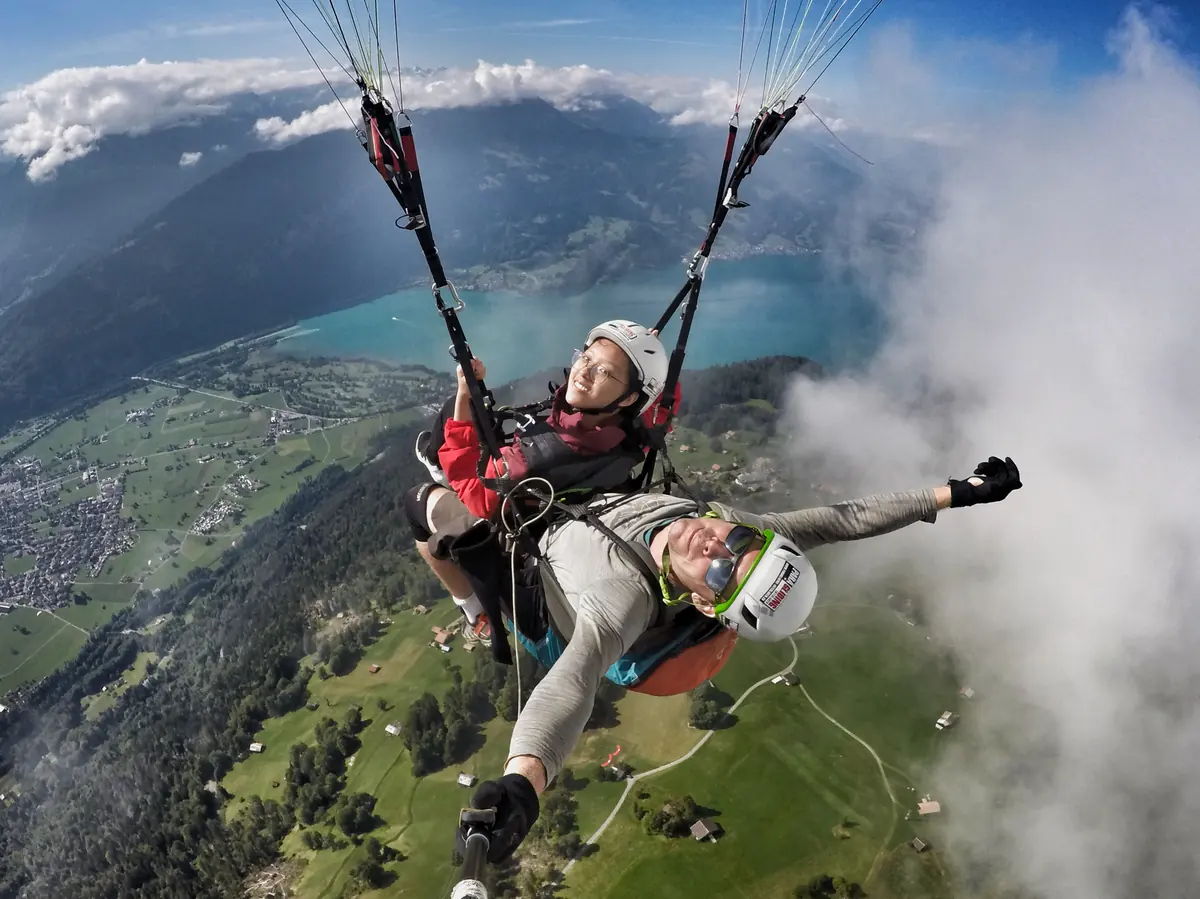
Safety
Swiss-trained pilots. Certified tandem gear. A professional culture that waits when the mountain asks us to wait. Here is the practical safety picture before you book.
01The setup
Commercial tandem flying here follows Swiss training, local site management, and a shared rule: conditions come first.
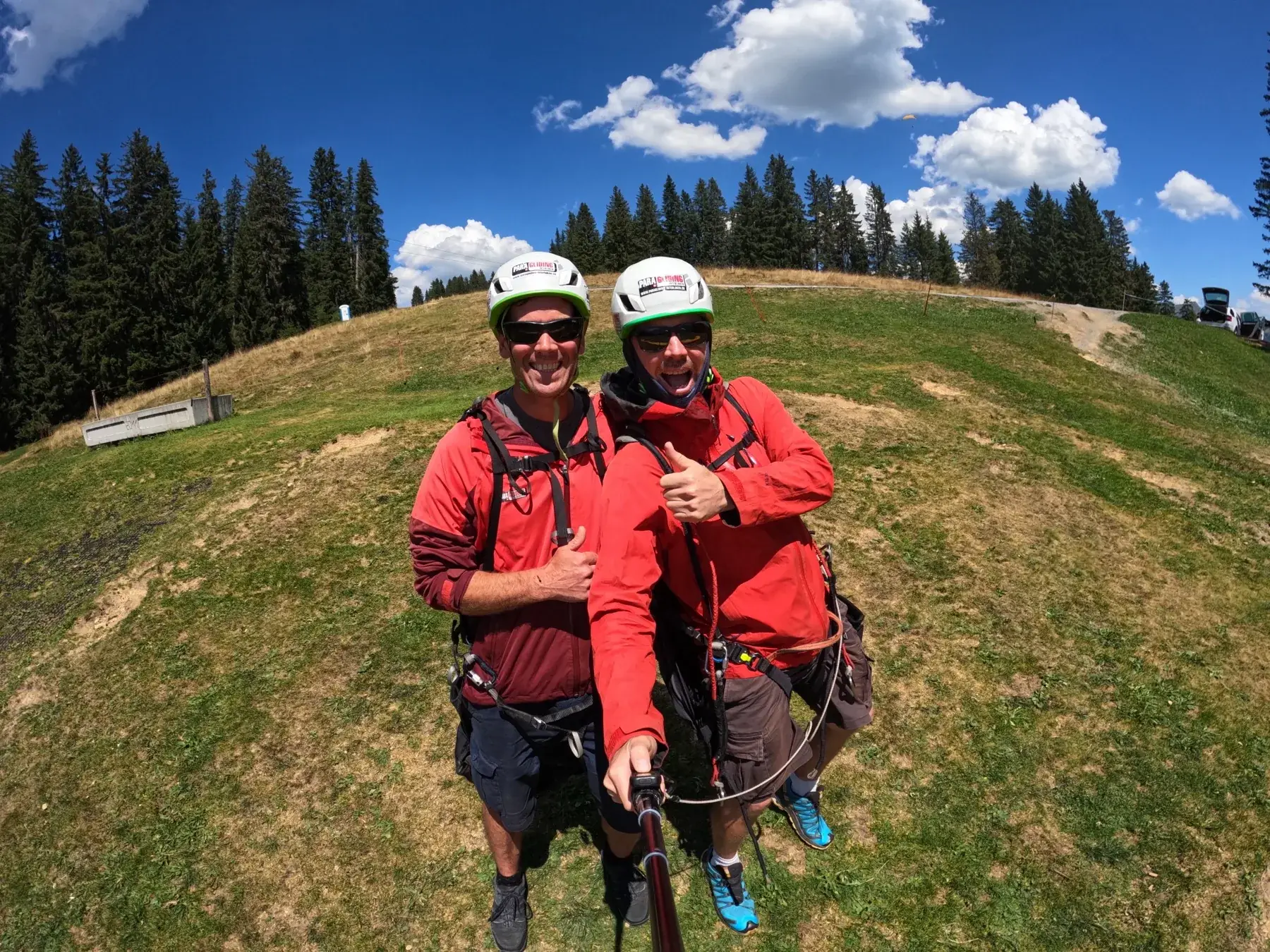
From scratch, you're looking at around five years of serious flying before you're qualified to carry passengers. Swiss tandem licences take years of serious flying.
Commercial pilots here belong to the VKPI (Verein Kommerzieller Piloten Interlaken). The association helps manage takeoff and landing sites, flight safety, and shared standards across the valley.
Flights go ahead when the air is right. A cancelled morning shows the system working. That discipline helps this area run tens of thousands of tandems a year.
Every commercial pilot flying passengers in Interlaken is licensed and covered by specially negotiated insurance through Helvetia, including liability and third-party medical cover.
Gear matters. The pilot matters too. Becoming a tandem pilot takes years of dedicated flying. By the time someone carries passengers commercially here, mountain weather judgment and passenger briefings are part of the job.
Swiss standards mean the pilots you'll meet are typically experienced and serious about the work. Commercial tandem flying means a valid licence, the right insurance, and accountability to local site rules. That professional layer is what separates Interlaken from a casual hillside launch elsewhere.
Most of us stay because the job is still fun after thousands of flights. A good pilot enjoys the view, the flying, and the moment a nervous guest starts smiling.
02Before every round
Gear and training matter. Weather judgment is part of the work. Before each round we check the forecast again. A breakfast guess is too weak for mountain flying.
In the old days we leaned hard on mountain sense: reading the sky, feeling the wind on the slope, and making our best guess. That judgment still matters. Live data makes it much stronger.
Today we have sophisticated forecast models and live weather stations. We can see wind and rain moving toward the valley, hour by hour and ridge by ridge, before we commit a round.
Mountain weather can change quickly. Experience plus live data gives us a strong picture. Surprise gusts or rain bands are uncommon during operations. When conditions turn, we scrub or wait.
More on how cancellations actually play out: weather & cancellations.
South föhn is a warm, dry, gusty wind that blows down the northern side of the Alps. It is one of the main reasons we cancel flights in Interlaken, even when the sky looks perfect.
Föhn can look like a beautiful, sunny day, but the wind is gusty and turbulent, so we don't fly. If your flight is cancelled for föhn, that means our system is working.
It starts with a large pressure difference across the Alps. When a high-pressure system sits south of the Alps (over Italy) and a low-pressure system sits to the north, moist air is driven up the southern mountain slopes.
03Equipment
Tandem equipment is engineered, certified, and inspected to a standard most first-timers underestimate. The wing, harness, lines, and reserve all get checked because they carry two people in mountain air.
Tandem gliders are shock-tested to 8G, far beyond anything a normal scenic flight asks for. They are certified aircraft with scheduled inspections.
Lines are rated for loads many times your weight in flight. They are replaced on a schedule and checked before every takeoff.
Modern tandem harnesses require every strap to be closed and locked before takeoff. If a buckle is open, the system stops the launch.
We carry a reserve on every flight. In 16,000+ flights, mine has stayed in the harness. Many tandem pilots go their whole careers without throwing one. The reserve still gets packed and inspected on schedule.
In all my flying, I've had exactly one equipment failure: a brake line snapped off in my hand while I was doing some wingovers. The timing was perfect. Moments earlier I'd been telling my passenger how reliable modern tandem equipment is.
She didn't even notice. I steered us down and landed using the C-lines instead, a backup we train for, and we touched down like any other flight.
The likely culprit? Damage from someone walking on the lines at takeoff. That's why we're so fussy about it at launch, and why you'll hear “please don't step on the lines” more than once. Inspections, line replacements, and pre-launch checks exist for exactly these moments.
Drew
04The honest answer
Paragliding carries real risk. Interlaken manages it through licensed pilots, strict weather calls, inspected gear, and a high-volume tandem culture with an outstanding track record.
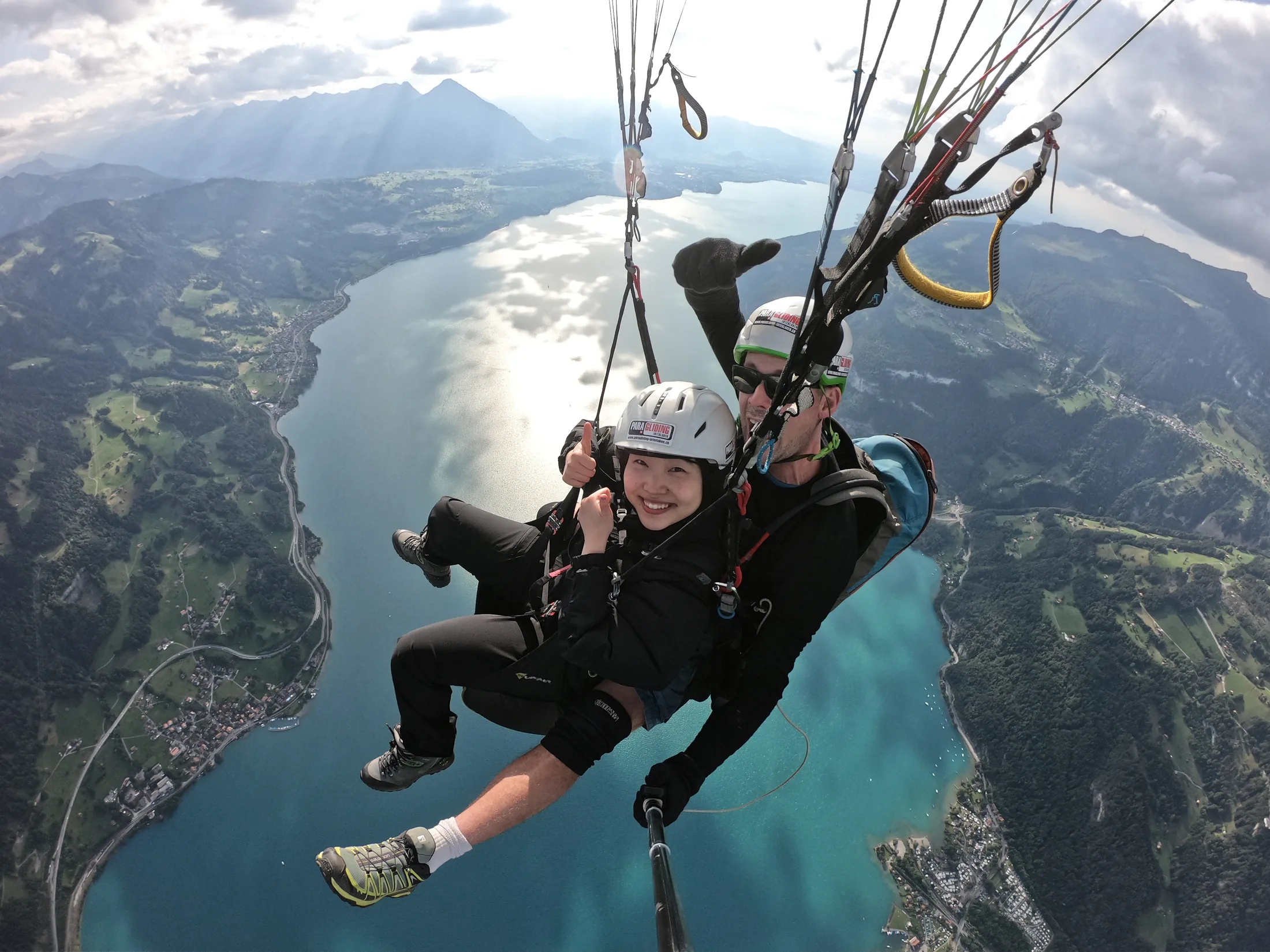
Every year there are accidents in paragliding worldwide: sprains, broken ankles, and the occasional harder landing. That reality belongs in any honest safety guide.
In the 16 years I've worked in Interlaken there has been no tandem paragliding death here, and as far as I know there were none before that either. There have been serious accidents, which is exactly why the checks on this page matter. The record is remarkable when you consider this area sees over 70,000 tandem flights a year.
I always joke that the most dangerous part of the whole trip is the drive up, with all those tourist buses on the mountain roads. Once you're clipped in with a licensed pilot, on inspected gear, in a valley that cancels when it should, you're inside one of the most practised tandem environments on earth.
05Your part
Once you're in the air, your pilot handles the flying. On the slope, your commitment matters.
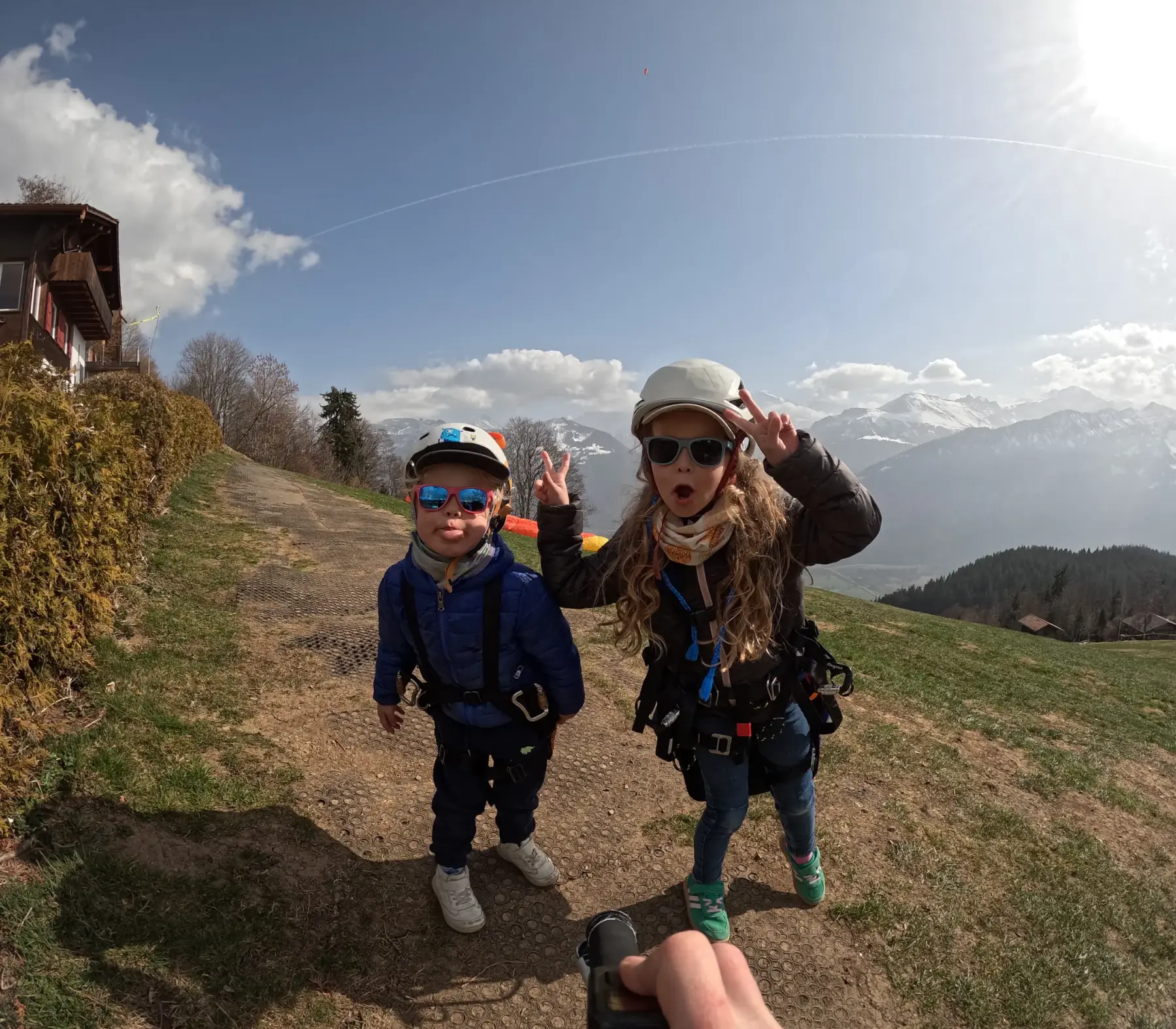
For pilots, the riskiest moment is a passenger freezing during takeoff. A strong run protects both of us. Channel the nerves into your feet when your pilot says go.
Feeling butterflies is normal. The flight itself is usually calm and scenic. Freezing on launch creates the bigger practical risk.
When your pilot says run, run. Commit and keep moving until your feet lift. It helps both of you launch cleanly.
If the takeoff run worries you, pick a slot with an easier launch or ask me before you book. The flight finder can help.
06Before you book
Pilots are covered. You still need your own travel medical cover for Switzerland. Here's the practical picture.
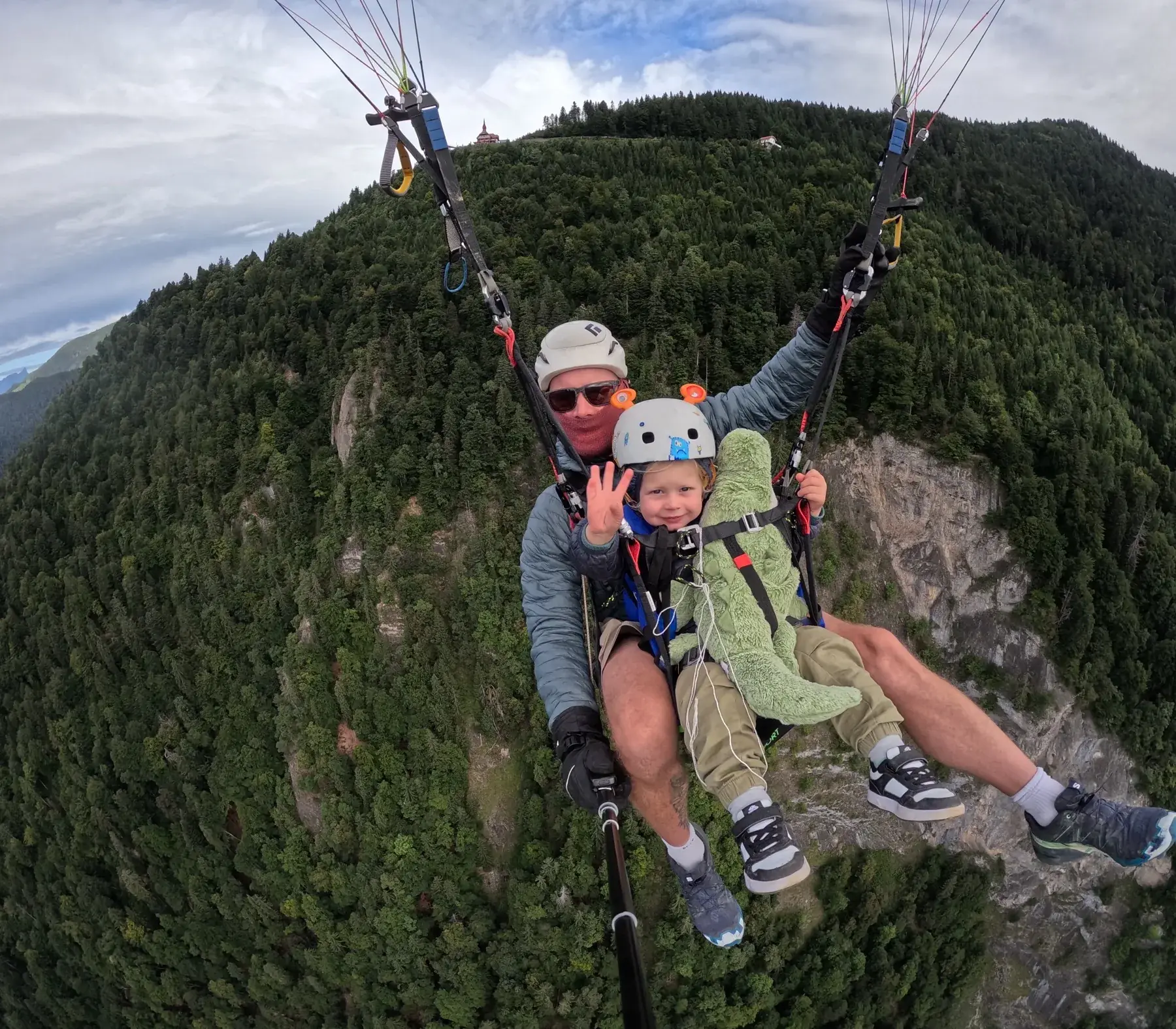
All pilots who fly in Interlaken carry liability and third-party medical insurance through the professional setup. Treat it as the baseline, then sort your own travel medical cover too.
Swiss healthcare is expensive. If you need treatment, hospitals may ask you to pay upfront with a credit card before you claim from insurance. The pilot's policy is a backup; your own travel medical cover matters on the day.
I strongly recommend arranging adequate travel insurance before you leave your country, especially if you're travelling with kids. Accidents happen, and a Swiss medical bill can be huge. Without insurance, you may still have to pay first.
Make sure your policy covers adventure activities. Keep details on your phone. Bring a credit card. Sort it before launch.
Questions?
Ask the blunt question before you book. I'll answer from a local pilot's point of view.